On the day of our Grade 4 Pop-Up Restaurant, the room smelled of garlic, tomato sauce, and excitement. The excitement smelled suspiciously like sweat. Children in crooked aprons were taking orders, counting change, and explaining their menu choices to customers. There was a lot going on, and the work suddenly mattered in a very immediate way.
A price on a worksheet is easy enough to change. A price on a menu needs some thought when somebody is actually deciding whether to buy the food. Students had to consider costs, explain decisions, and work with people who didn't always agree with them. The concepts we'd been teaching had somewhere to go.
This is what draws me to experiential learning. It gives students a reason to use what they know and a chance to discover what they haven't understood yet. A project can make the gap between an idea and its application quite difficult to ignore.
An experience needs a learning purpose
But an exciting day isn't sufficient evidence of learning. A restaurant project can become a very elaborate exercise in making signs and moving furniture. We still need to be clear about what children are learning, teach the knowledge and skills they need, and check who is doing the thinking. It is possible for a group to produce something impressive while one child makes most of the decisions.
Choice helps when it is meaningful. Students can decide how to present a menu, organise responsibilities, or respond to a problem. They don't need to decide absolutely everything. Clear boundaries and well-timed teaching make it easier for them to take responsibility without being left to struggle with something they haven't been equipped to do.
Making time to reflect
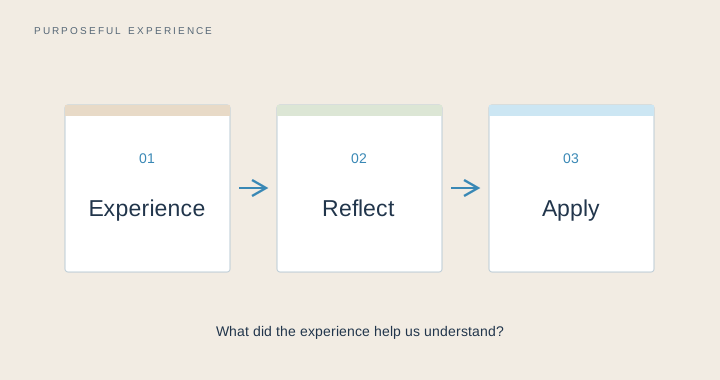
Reflection matters just as much. After the activity, I want to hear why a group chose a particular price, how they dealt with a disagreement, or what they would change next time. Those conversations help us distinguish an enjoyable experience from an experience students have actually learned from. They also give me a better idea of what needs teaching again.
Some of the most valuable learning in the restaurant happened when things became difficult. Students had to remain patient, communicate with customers, and adjust their plans. Those moments gave teamwork and responsibility a practical meaning. It is much easier to talk about compromise than to manage it when you are busy and somebody has a different idea about what should happen next.
The pride students took in the work was lovely to see. They had made decisions that other people responded to, and they could recognise their contribution to the result.
Purpose at a smaller scale
We don't need to run a restaurant every time we want learning to feel purposeful. A smaller task with a real audience or a useful outcome can do a great deal. What matters to me is that students have a reason to care about the work, enough support to do it well, and time afterwards to understand what the experience has taught them.
Written by Tim Van Der Merwe.
Continue the conversation ↗