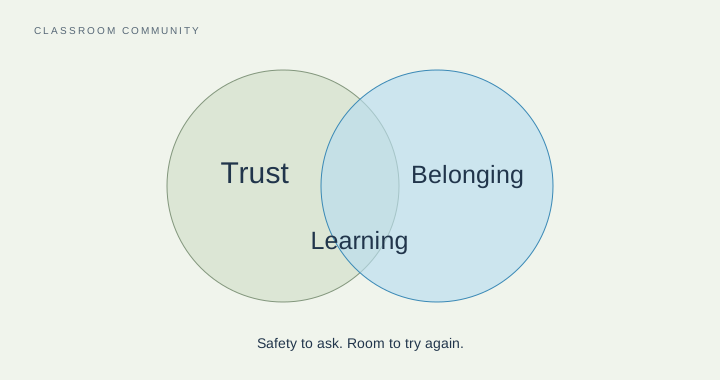
You can plan a good lesson and still find that the class isn't ready for it. The questions are there. The resources are ready. But an argument from break time has followed the children into the room, and half their attention is still on it. You can push on with the lesson, of course. Whether much learning happens is another matter.
This is why I struggle with the idea that classroom community is something we attend to once the academic work is finished. How students feel about being in the room affects what they are willing to do there. Asking a question, offering an uncertain answer, or showing someone an unfinished piece of writing all involve a degree of exposure. Children notice how those moments are handled.
Trust in ordinary moments
Trust develops through fairly ordinary things. We follow through on what we say. We explain a decision. We notice when a child has been left out. After a conflict, we help students repair what happened and find a way back into the group. None of this is particularly dramatic, but children have plenty of opportunities to notice whether we mean it.
Fairness matters here, although fairness doesn't always mean treating everyone identically. Some children need a different kind of support. Others need more time. We have to make those judgements while maintaining expectations that students can understand. A classroom can be caring and still ask a great deal of its learners.
Research gives us a reason to take social and emotional learning seriously. Durlak and colleagues' 2011 meta-analysis covered 213 school-based programmes and reported academic gains equivalent to 11 percentile points compared with control groups. That finding concerns SEL programmes; it doesn't establish that a particular morning meeting or classroom game will produce the same result. For me, it supports the broader case for giving this work proper attention alongside academic teaching.[1]
What play makes visible
Play is one practical place to start. I've seen a five-minute team challenge change the mood of a class more effectively than another talk about being kind. A shared game gives children something to do together. It also gives us something specific to discuss afterwards: who listened, what happened when someone became frustrated, and whether everyone had a way to contribute.
Of course, games can expose difficulties as readily as they resolve them. A competitive activity can leave the same children feeling excluded again. The teacher still has to notice what is happening and respond. Putting students in a group doesn't automatically make them a community.
Making room to try again
I want students to know that making a mistake won't cost them their place in the classroom. That takes consistent work from me, especially on the days when I am tired or impatient. The lesson plan matters. So does what happens when a child gets something wrong, falls out with a friend, or needs to try again.
References
Written by Tim Van Der Merwe.
Continue the conversation ↗